


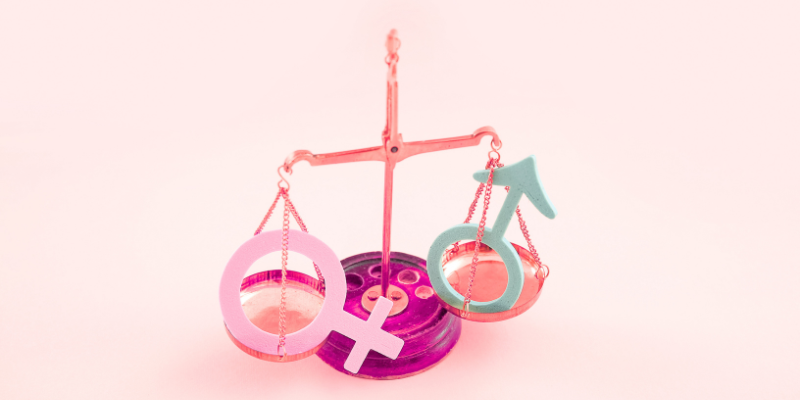
At the end of 2025, some LinkedIn users noticed a change in how far their content reached and the amount of interaction they were having on the platform. These users also happened to all identify as women. One woman who helped her husband with his posts in addition to posting on her own feed, saw that he received greater engagement and reach than her posts, despite having a smaller audience. This woman decided to do an experiment and changed the setting on her LinkedIn account to make herself “male.”
#WearThePants
She was surprised by what she found: an almost immediate and startlingly large uptick in traffic to her posts. She explained her experiment in a post and encouraged others to try it. And, thus, the hashtag #wearthepants was born. Many other women decided to try this experiment and found similar uptake in traffic. Some of them also changed their profile photo and asked AI to make their writing sound more “masculine.” The results of those extra steps are unclear, but what is crystal clear is the uptick in interactions that women saw after toggling the switch to “male.” A user named Lucy Ferguson, following a shift to “Luke” in her account, saw an 800% increase in engagement the following week.
Officially, Non-biased
LinkedIn denies that their algorithm is biased. The platform is adamant that the LLM they’ve trained using all the content on the platform doesn’t consider a person’s “demographic attributes” when deciding how much to put their content out into people’s feeds. It is, in theory, “regularly audited for equitable treatment across our member base.”
However, it is possible for both this company and these women to be telling the truth. “The women running these experiments are not imagining things,” says Geri Stengel in her article, “What Gender-switch Experiments Reveal about LinkedIn Bias.” “They are documenting, in real time, what happens when a professional network built on historically male patterns meets an algorithm optimized for engagement.”
Martin Redstone says on his LinkedIn feed, “The algorithm has, in effect, learned a narrow, historically male-centric model of what ‘professional’ looks like. This is proxy bias: the algorithm isn’t penalizing the gender; it’s penalizing neutral characteristics that are correlated with gender.”
The “proxy bias” can be broken into three types: language bias for more “masculine” writing, topic bias toward more professionally focused content and career advancement bias, in which men are more likely to have linear career progressions. (Women are also 63% more likely to list career breaks, which is penalized by the algorithm. The “mommy tax” is a whole other issue for another Women’s History Month post!)
Stengal continues, “LinkedIn may not be intentionally biased, but the outcomes tell another story. As long as women have to ‘wear the pants’ to be visible, the platform cannot claim neutrality—no matter what variables its engineers say they’ve removed.”
Proxy Bias “Bro-coded”
Which is worse, that the algorithm has a bias against content because its creators are listed as women, or that the LLM generating LinkedIn’s new algorithm has enshrined this bias so deeply ingrained in our culture? Put simply, LinkedIn’s stance remains, “We didn’t ask the AI to amplify the structural biases of our society, but we can’t cure them either. Oh well.”
So, what is a content creator to do? It seems that, for the time being at least, women’s best option for optimizing their reach on the platform would be to follow along and #wearthepants.
When creating content, being aware of how small choices may lead algorithms to affect reach and engagement is key. Navigating content strategy in the world of AI is something MMC can help your business optimize. Some of our recent posts address AI and its influence on content strategy in other ways:
Sources:
- OK, what’s going on with LinkedIn’s algo? | TechCrunch
- What’s happening with the LinkedIn algorithm?
- Putting members first: testing and measuring how content appears in your Feed from LinkedIn
- Why are women gender-swapping on LinkedIn? – The Washington Post (paywall)
This post is courtesy of MMC Account Manager Claire Horn.