
When I created my first profile, LinkedIn was treated like a place to park your resume for potential employers and revisit every few years. Today, this professional network is often the first place someone goes after hearing your name or your company’s. What they find in that moment shapes how credible, relevant and trustworthy you — and your business — feel.
Knowing how to build a LinkedIn profile is more important than ever. Yes, it’s a personal branding tool, but it’s also a reflection of your entire organization. Research from the Edelman Trust Barometer consistently shows that people trust individuals more than brands, making employees’ presence on platforms like LinkedIn a key factor in how companies are evaluated.
And yet, I’m willing to bet that many of your team members’ profiles are incomplete, outdated or inactive. (Maybe even your own.)
Think of your LinkedIn profile as a decision page. When someone lands on it, they’re asking a simple question: Do I trust this person enough to take the next step?
Here’s how to make sure the answer is yes.
Start with the First Impression
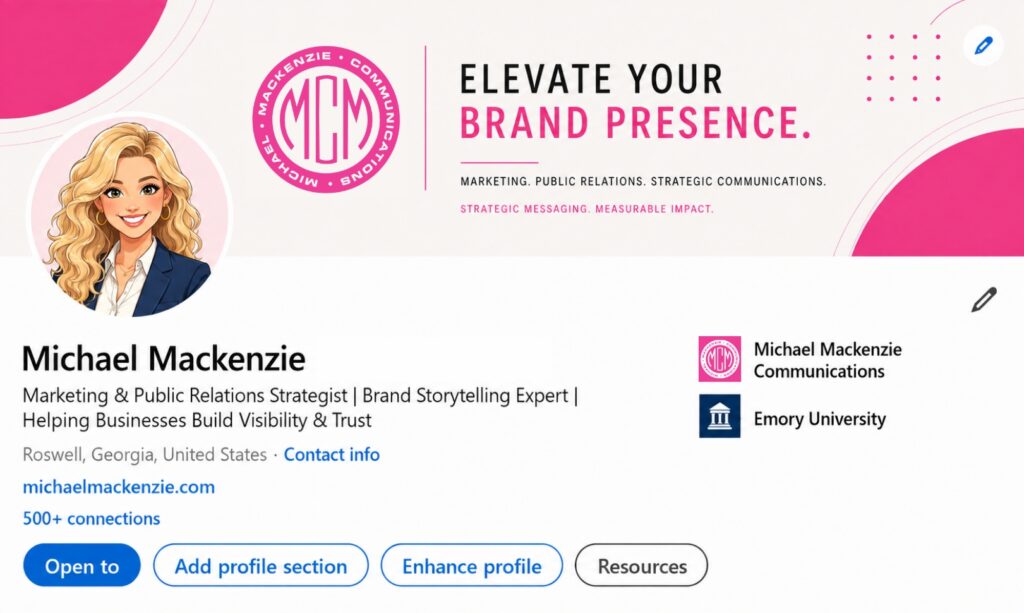
This is where most people rush. Your profile should immediately signal professionalism and clarity. That starts with a few basics:
- A professional profile photo (not cropped, not outdated)
- A banner image that reinforces your role or industry
- A custom URL (clean, searchable, shareable)
- Clear contact information so people know how to reach you
None of this is complicated, but it’s often incomplete. That alone can cost you opportunities — whether that’s building relationships with potential clients, partners or hiring managers.
Make Your Headline Do Real Work
Go beyond your job title in the headline field. “Account Executive at XYZ Company” doesn’t tell anyone why they should care to make a connection.
Here’s a stronger approach: I help [who you work with] achieve [specific outcome] through [how you do it]
This reframes your profile from who you are to what you do for others, which is what people evaluate. Bonus points if you include relevant keywords! After all, LinkedIn also functions like a search engine. The words you use in your headline, About section and experience help the platform understand what you do and when to surface your profile in search results.
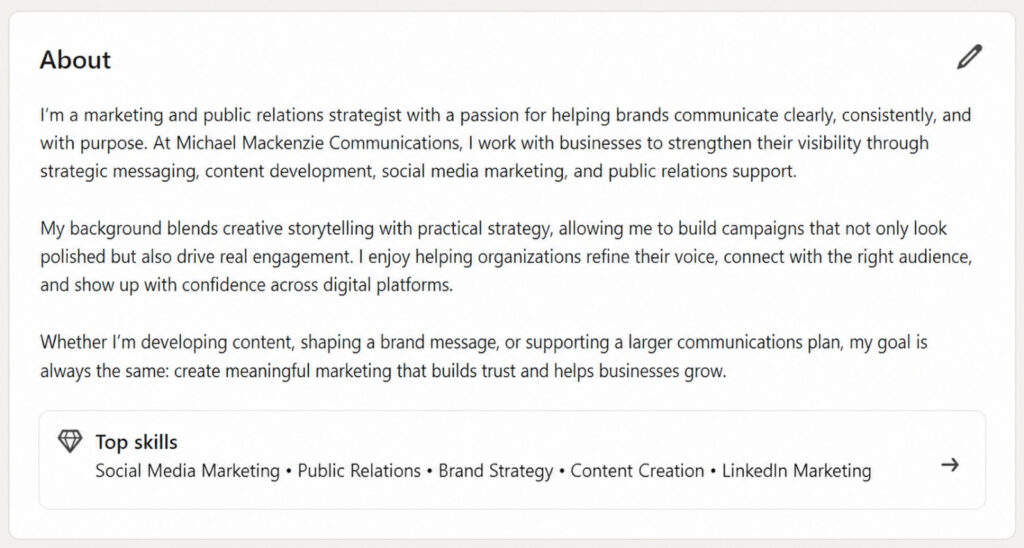
Tell a Story in Your About Section
This is one of the most underused yet most important sections of your profile on the entire social media site. Instead of listing credentials, tell a story that explains what you do, who you help and why your approach is different.
Weave in your experience, your strengths and what you care about professionally. Include keywords naturally for search visibility.
Turn Experience into Proof
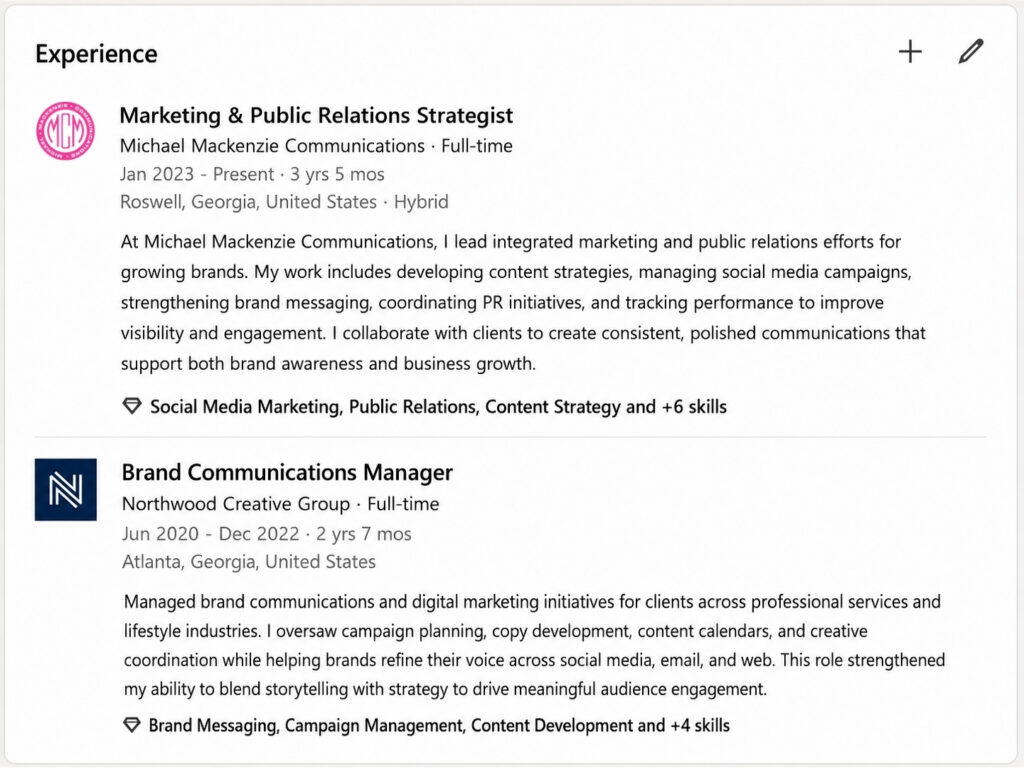
Too many profiles read like job descriptions, especially in the Experience section. Take it as a chance to show your impact in brief descriptions, not just your tasks.
Use full sentences (bullets are okay) and add specifics about:
- What your company does
- What is your role responsible for
- What you’ve contributed to or improved
Don’t forget to link to your company page so your profile feels complete and connected.
Round It Out with Signals That Build Trust
Remember that people see what you do and say on LinkedIn — what you post, like and engage with. So treat everything here as true social proof.
As you round out your profile, keep a few things in mind:
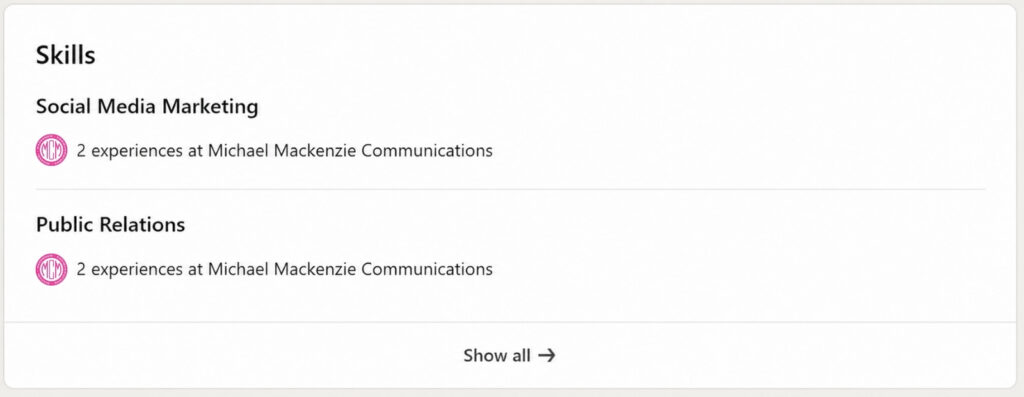
- Add relevant skills (your top 10–15 matter most for search).
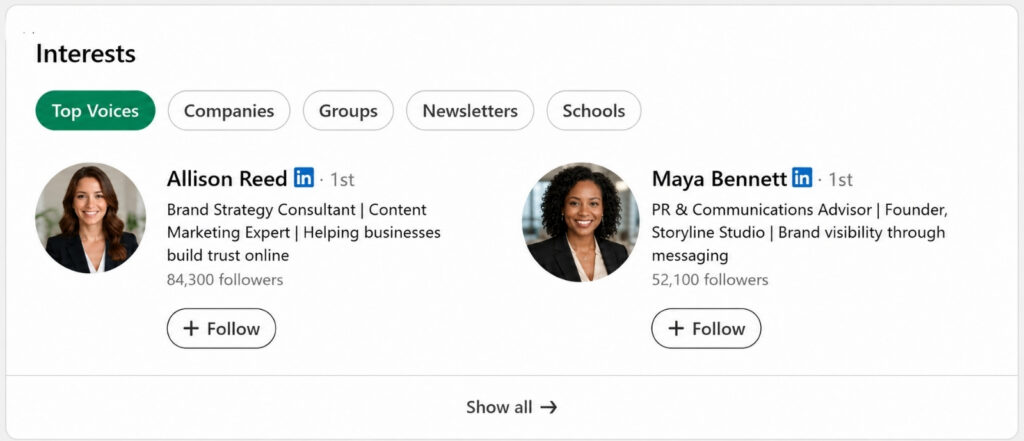
- Keep your activity and interests aligned with your professional voice.
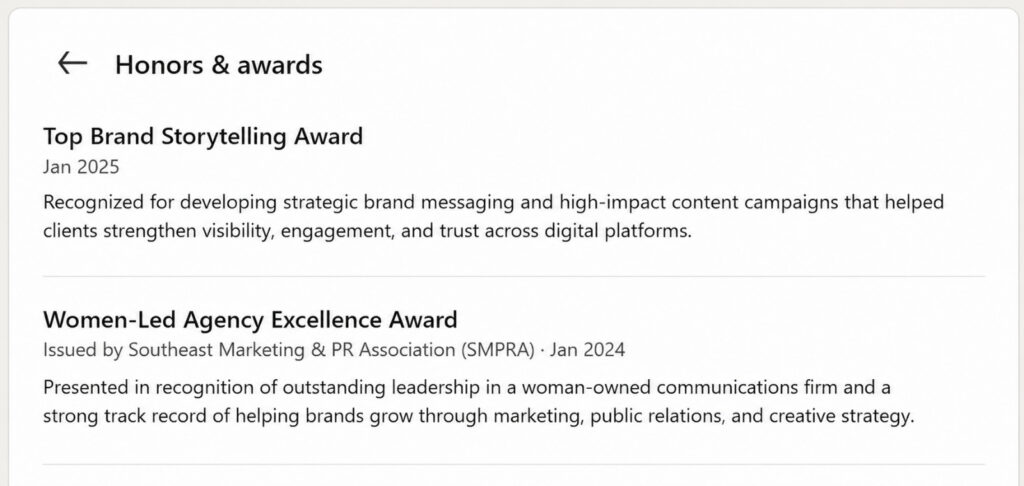
- Don’t be afraid to brag about yourself!
Why This Matters for Your Business
Every profile connected to your business either reinforces your credibility — or quietly works against it. That’s what makes this more than just a personal exercise. It’s a team-level opportunity to show up consistently, clearly and professionally across every touchpoint. In many ways, this is the foundation of effective social media management because your brand isn’t just what your company posts; it’s how your people show up.
The good news is that you don’t need a perfect profile to start seeing value. You need one that reflects you clearly and gives people a reason to trust what they’re seeing. Start there and make sure your team does the same.
Because once your profile is in place and up to date, the next question becomes: what do you actually do with it?
In our next post, we’ll break down how to tackle LinkedIn social media engagement in a way that fits your schedule — whether you have an hour a week or you’re ready to make it a core part of your sales and marketing strategy.
This post is courtesy of MMC Account Manager Angela Wijesinghe.